// Polyfill
function at(n) {
// ToInteger() abstract op
n = Math.trunc(n) || 0;
// Allow negative indexing from the end
if(n < 0) n += this.length;
// OOB access is guaranteed to return undefined
if(n < 0 || n >= this.length) return undefined;
// Otherwise, this is just normal property access
return this[n];
}
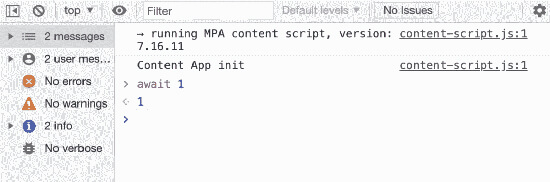
二、顶层 await " k8 k8 `1 F: S d await 都得用 async 函数包裹大家肯定都知道,这个限制导致我们不能在全局作用域下直接使用 await,必须得包装一下。有了这个提案以后,大家就可以直接在顶层写 await 了,算是一个便利性的提案。目前该提案已经进入阶段 4,板上钉钉会发布。另外其实 Chrome 近期的更新已经支持了该功能。- [2 A4 T+ s- ]3 A
4 j2 G. Z- {8 O 三、Error Cause' W" V( W( Z4 Q0 c0 h
这个语法主要帮助我们便捷地传递Error。一旦可能出错的地方一多,实际就不清楚错误到底是哪里产生的。如果希望外部清楚的知道上下文信息的话,需要封装以下error。( G5 x6 E! W; J+ j7 Y% Z0 t
let result = exclaim(capitalize(doubleSay("hello")));
result //=> "Hello, hello!"
let result = "hello"
|> doubleSay
|> capitalize
|> exclaim;
result //=> "Hello, hello!"
这只是对于单个参数的用法,其它的用法有兴趣的读者可以自行阅读提案,其中涉及到了特别多的内容,这大概也是导致推进阶段慢的原因吧。 1 E& O9 p H* s8 d/ g五、新的数据结构:Records & Tuples2 I/ U' u$ `- c- @( g% F
这个数据结构笔者觉得发布以后会特别有用,总共新增了两种数据结构,可以通过#来声明:/ `! u1 v2 \5 b( `4 a% H
 |手机版|小黑屋|paopaomj.COM
(
|手机版|小黑屋|paopaomj.COM
(  渝ICP备18007172号|
 渝公网安备50010502503914号 )



 发表于 2021-7-9 09:12:45